
The grand, high-ceilinged halls of Yerevan State University today hosted a gathering that felt less like a local seminar and more like a national pivot point. As I walked through the corridors of the fourth AI Conf Armenia, I was struck by the sheer diversity of the thousands in attendance. It was a rare intersection of generations: silver-haired academics engaging with teenage coders, and well-renowned Armenian startup founders navigating the crowd alongside curious citizens from across the country.
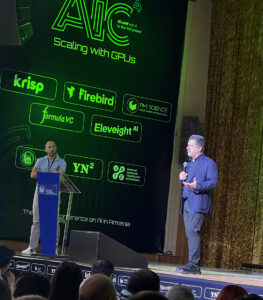
The focal point of the morning was the arrival of Rev Lebaredyan, the vice president of Omniverse and simulation technology at NVIDIA. The queues to enter the auditorium for his talk, “AI Agents and the Token Economy,” snaked through the lobby, a testament to the community’s intent to understand how a small yet powerful nation like Armenia fits into a global “Token Economy.”
This sense of anticipation was anchored by new details regarding Armenia’s physical tech infrastructure. While the groundwork was laid back in February with the official announcement of a $4 billion Phase 2 investment, today’s conference provided a major update on the “AI Factory” now under construction in Hrazdan. Alexander Yesayan, co-founder of Firebird, confirmed on the YSU stage that the capacity of the facility is already set to double.
This project, a collaborative effort between Firebird, NVIDIA, the Armenian government, and the U.S., is operating on an ambitious timeline. By the end of this year, the launch of 50,000 GPUs is expected to place Armenia among the top five countries globally in terms of compute density, surpassing several major European nations. The ultimate goal for the third phase is even higher: 110,000 GPUs.
During his keynote, Lebaredyan offered a perspective that was both a challenge and an invitation:
“Today, no one in the world knows how to use AI, which gives equal opportunities to both Armenia and the United States. We are now becoming a rich country in terms of AI, but it depends on us whether we will take advantage of this opportunity or not.”
The first tangible results of this infrastructure are imminent. The 6,000 GPUs from the initial phase are scheduled to become available to researchers within the next month. Furthermore, the Ministry of High-Tech Industry and Firebird AI just signed a $25 million agreement to acquire high-performance computing resources specifically for the use of startups, research groups, and educational institutions.
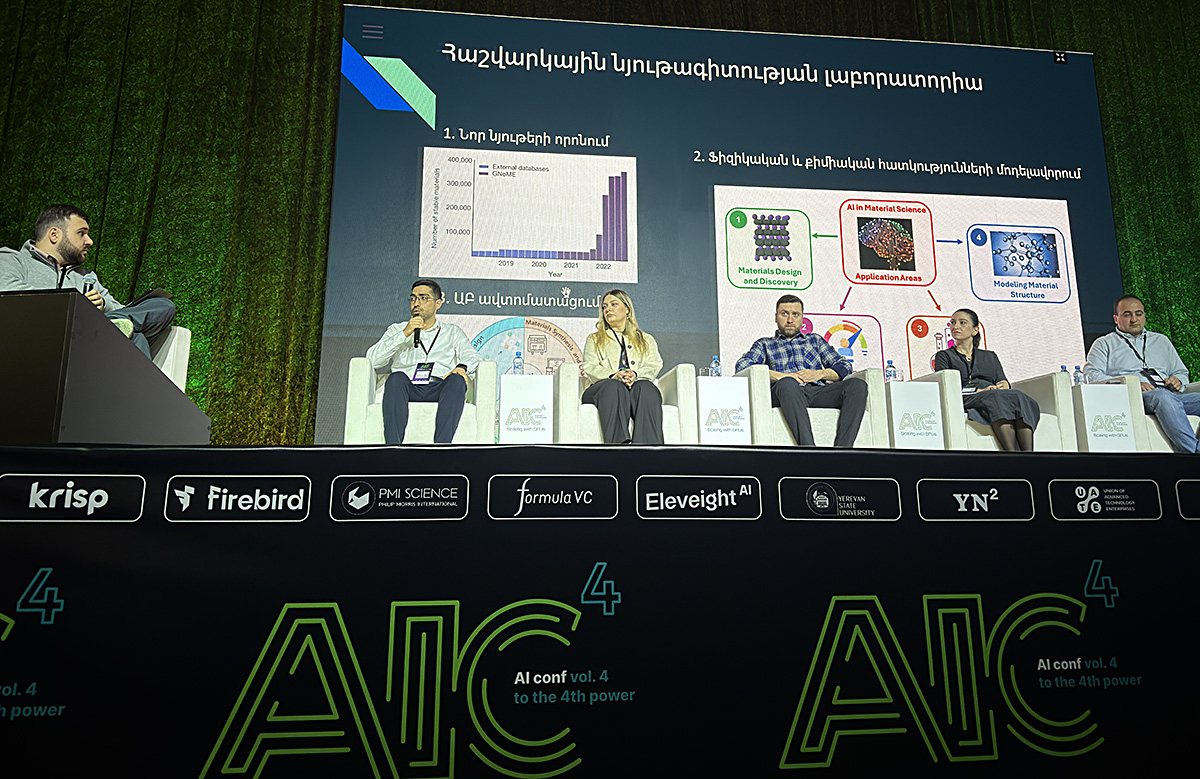
As the discussions shifted into the panel on GPU-intensive Research, the conversation turned toward the human element. If the national infrastructure is the blueprint, the panelists reminded the hundreds of students in the audience that they are the builders.
They offered a grounding reminder: while the pace of AI development is staggering and models change by the month, mathematics remains the immutable fundamental. Their advice to the next generation was clear: master the logic first, and the technology will follow. Perhaps most significantly, the researchers on stage actively invited students to reach out and get involved. For these students, the “ivory tower” was replaced today by an open door to industrial-scale computing power that was previously unimaginable in our region.
Building on these foundations, the conference moved into broader strategic and philosophical territory throughout the day. In his presentation, “The Armenian Doctrine of Artificial Intelligence,” Armen Aghajanyan sparked a central debate of the day: Should Armenia’s limited resources be focused on “Physical AI”, the marriage of intelligence with robotics, or do we have a say on pure software and LLM development as well?
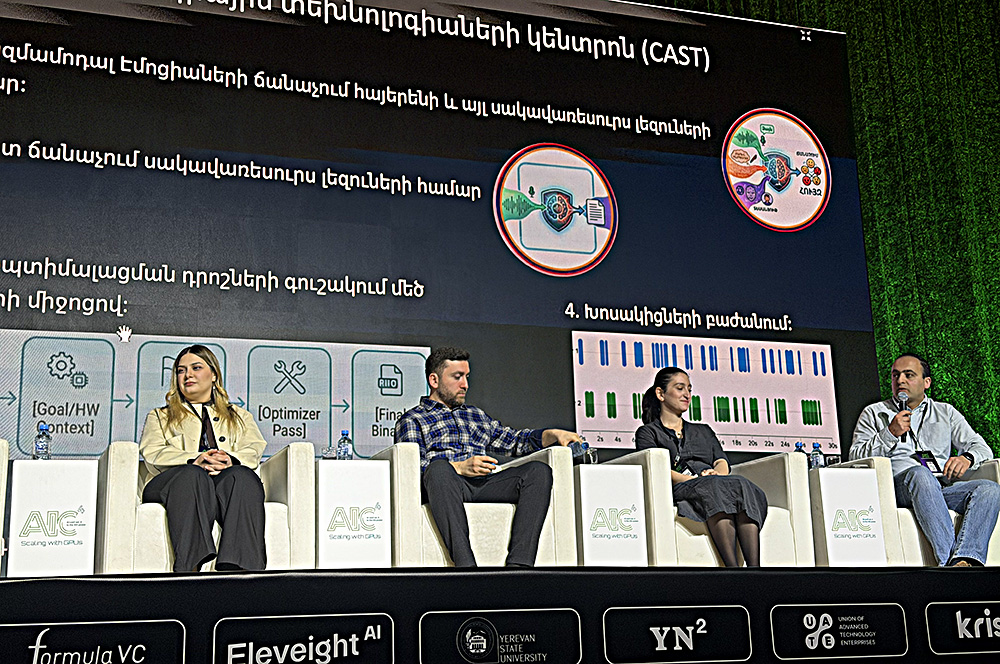
This question of focus was echoed in the discussions regarding Armenian AI. Experts from YerevaNN and Krisp emphasized that building models that understand our own language is not merely a technical goal, but a cultural and strategic necessity. Beyond preserving our heritage in an English-dominated landscape, they argued that domestic models are a safeguard for our future. Without them, Armenia remains vulnerable; should financial constraints, geopolitical shifts, or other external pressures cut off our access to the global AI tools we currently rely on, we risk losing access to vital information and digital infrastructure altogether.
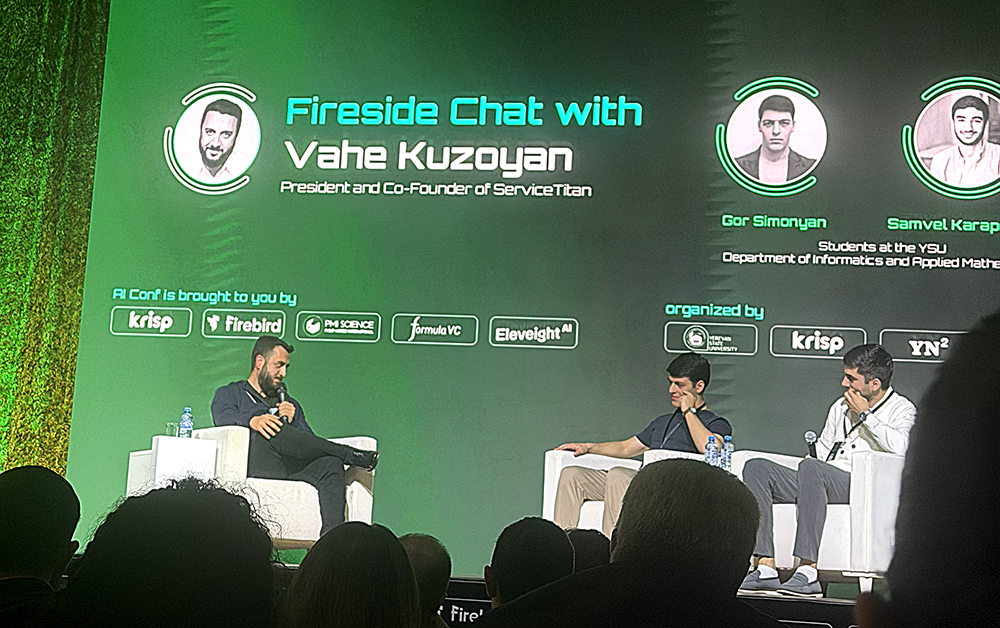
This and other debates today were truly thought-provoking, and the numbers being discussed were historic and inspiring, to say the least. But as the crowd eventually filtered out of YSU, the mood was one of quiet responsibility. The actual impact of this conference won’t be measured by the applause in the hall, but by the actual results in the coming months as that first batch of GPUs goes live in Hrazdan.
Armenia is no longer just observing the AI revolution; we are building the infrastructure to host it. Whether this leads to the “Silicon Highlands” we envision now depends on the collective creativity and collaboration of the people I met at the AI Conf 2026 today.
The infrastructure is coming; the next move belongs to the innovators.
By Milena Baghdasaryan, Melkoni Media